
Psychological Safety Is the Future of Workplace Safety
When people think about workplace safety, they often picture hard hats, safety shoes, emergency exits, and fire extinguishers. These remain essential components of Occupational Safety and Health (OSH), but today's workplaces face another equally important challenge—protecting people's mental wellbeing.
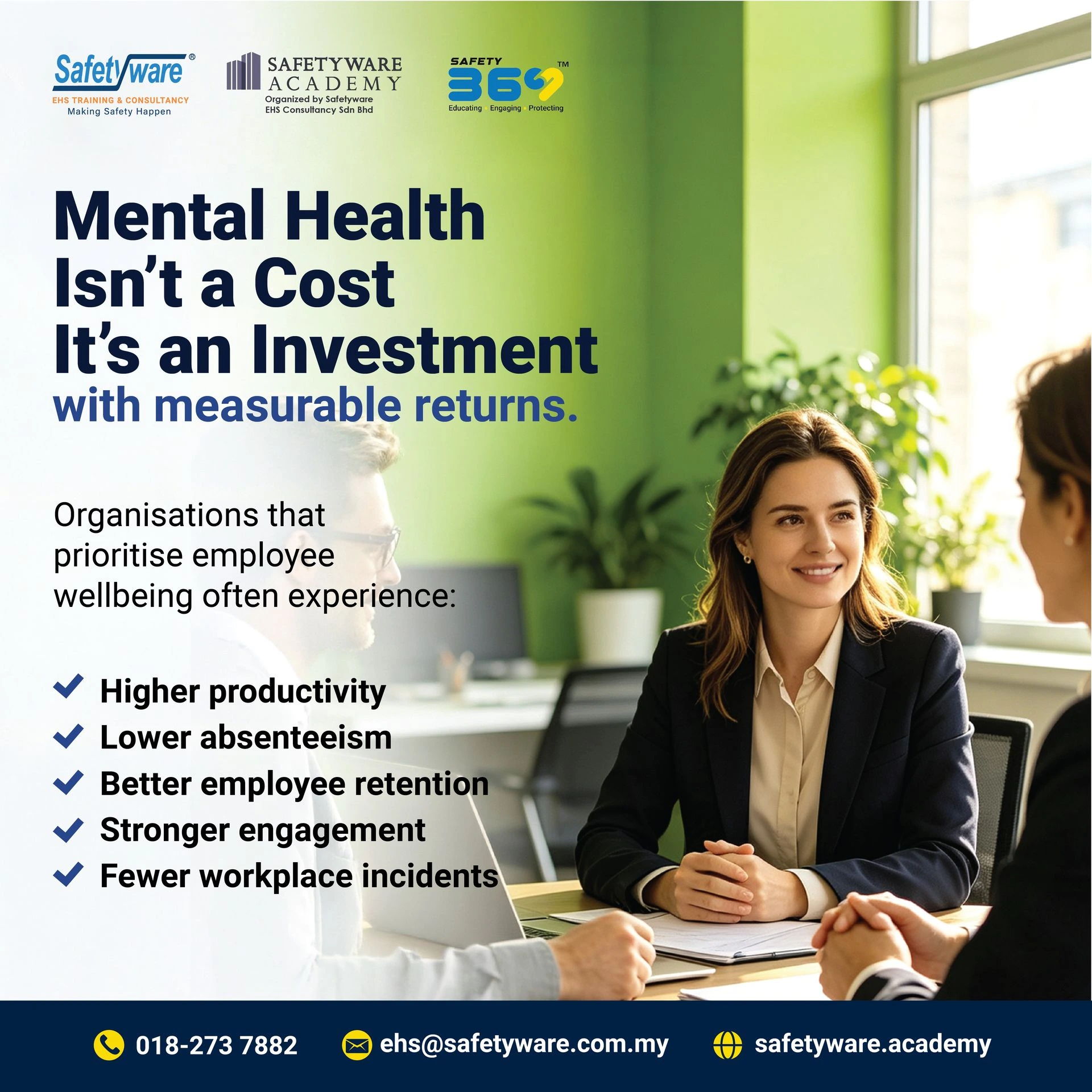
Across Malaysia and around the world, organisations are recognising that psychological safety, workplace mental health, and employee wellbeing are no longer optional HR initiatives. They are strategic business priorities that directly influence productivity, innovation, employee retention, and organisational resilience.
As expectations from regulators, customers, investors, and employees continue to evolve, businesses must move beyond compliance and embrace a broader approach to workplace safety—one that protects both physical and psychological health.
This is where the concept of Safe Mind, Smart Leadership becomes increasingly important.
Why Workplace Wellbeing Matters More Than Ever
Many organisations measure safety by tracking workplace injuries and lost-time incidents. While these metrics remain important, they do not tell the whole story.
Employees experiencing chronic stress, burnout, workplace conflict, bullying, fatigue, or excessive workloads often continue showing up to work. Yet their performance, creativity, motivation, and engagement gradually decline.
This hidden cost affects every part of an organisation, including:
- Reduced productivity
- Higher absenteeism and presenteeism
- Increased employee turnover
- Lower team morale
- Poor customer experience
- Reduced innovation
- Greater business risk
A workplace can achieve zero physical injuries while employees silently struggle with psychological challenges.
That is why workplace wellbeing must become part of every organisation's safety strategy.
The Hidden Cost of Ignoring People
High employee turnover is often viewed as an HR issue.
In reality, it is a business issue.
Every employee resignation creates significant hidden costs, including:
✅ Recruitment expenses
✅ Onboarding and training costs
✅ Loss of organisational knowledge
✅ Reduced productivity
✅ Disruption to customers and projects
✅ Lower morale among remaining employees
Likewise, burnout carries a substantial financial impact even when employees remain with the organisation.
Disengaged employees may be physically present but mentally exhausted, reducing their ability to contribute effectively.
Investing in employee wellbeing is therefore not simply about supporting employees—it is about protecting business performance.
Psychological Safety Creates High-Performing Organisations
One of the strongest predictors of organisational performance is psychological safety.
Psychological safety refers to an environment where employees feel comfortable speaking up, asking questions, sharing ideas, reporting concerns, and learning from mistakes without fear of blame or punishment.
When employees feel psychologically safe, organisations benefit from:
- Better collaboration
- Stronger innovation
- Faster problem solving
- Improved employee engagement
- Greater trust
- Stronger safety culture
Psychological safety is increasingly recognised as a critical element of modern workplace leadership.
Psychosocial Risk Assessment Is Becoming a Business Necessity
Physical hazards have long been assessed through traditional safety risk assessments.
Today, organisations must also identify and manage psychosocial hazards.
Common psychosocial risks include:
✅ Excessive workload
✅ Long working hours
✅ Poor leadership
✅ Workplace bullying
✅ Harassment
✅ Role ambiguity
✅ Poor communication
✅Lack of employee support
Conducting a Psychosocial Risk Assessment enables organisations to identify these risks early and implement effective control measures before they negatively impact employees and business performance.
For Malaysian organisations, psychosocial risk management is becoming increasingly important as workplace expectations continue to evolve alongside national occupational safety initiatives.
Leadership Shapes Workplace Mental Health
Employees rarely leave because of company policies alone.
More often, they leave because of their everyday experiences with leaders.
Supportive leaders create environments where employees feel respected, valued, and motivated.
Poor leadership, however, often contributes to:
📛 Stress
📛 Burnout
📛 Disengagement
📛 Low morale
📛 Increased turnover
Strong leaders influence:
✅ Team wellbeing
✅ Psychological safety
✅ Employee engagement
✅ Innovation
✅ Organisational resilience
✅ Safety culture
Protecting people begins with leadership.
ESG Starts with People
Many organisations invest significant effort into environmental initiatives and governance frameworks.
Yet the “Social” pillar of ESG often receives less attention.
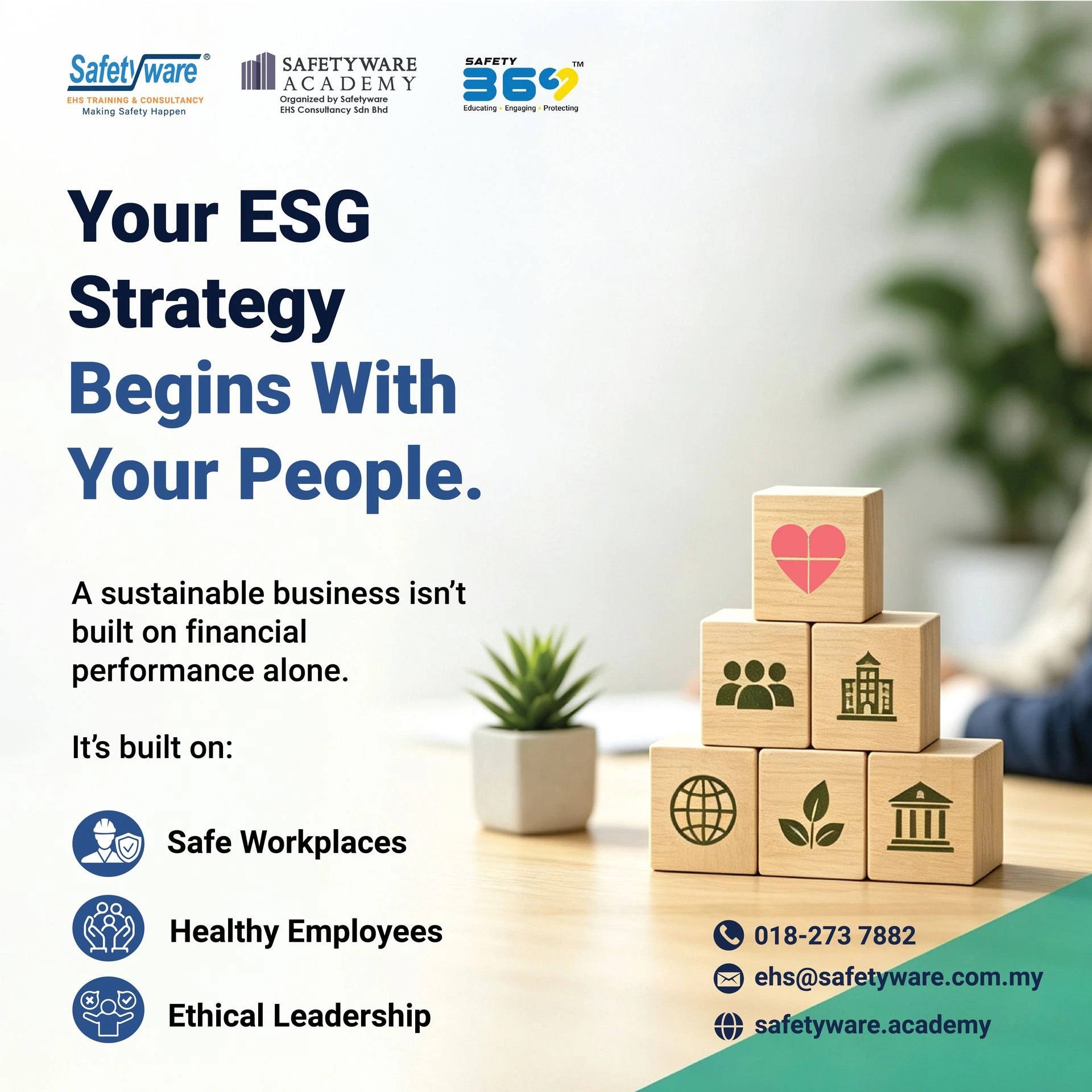
The Social pillar is about people.
It includes:
✅ Employee wellbeing
✅ Health and safety
✅ Fair treatment
✅ Diversity and inclusion
✅ Human rights
✅ Workplace culture
✅ Learning and development
Investors, customers, and business partners increasingly expect organisations to demonstrate how they care for their workforce—not only through policies, but through meaningful actions.
A strong safety culture and a healthy workplace support both business performance and ESG outcomes.
Global Customers Are Raising Expectations
International customers are paying closer attention to how suppliers manage their workforce.
Companies involved in global supply chains may be asked about:
✅ Worker wellbeing
✅ Responsible employment practices
✅ Health and safety systems
✅ Employee engagement
✅ Social responsibility initiatives
Building a workplace where people can thrive is becoming an important competitive advantage.
The Best Safety Investment Is Your People
Technology will continue to transform workplaces.
Artificial intelligence will improve safety monitoring.
Automation will reduce physical hazards.
Digital systems will strengthen compliance.
But none of these can replace trust, leadership, communication, and care.
People remain every organisation’s greatest asset.
Protecting them is not simply a compliance exercise—it is an investment in business resilience, productivity, innovation, and long-term success.
Join the Conversation at Safety360 EHS Summit 2026
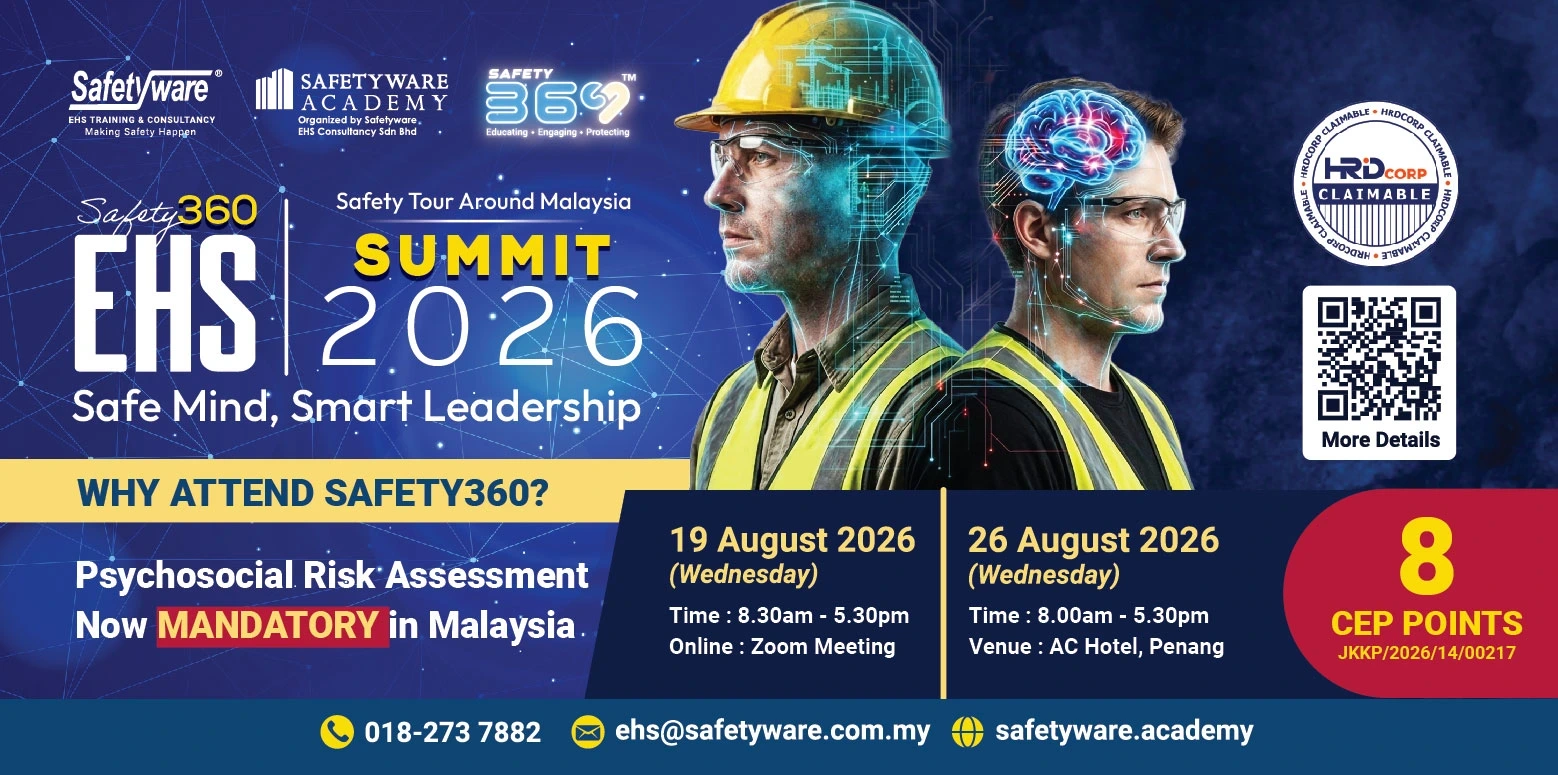
At Safety360 EHS Summit 2026 – Safe Mind, Smart Leadership, industry leaders will explore practical strategies to:
✅ Build psychologically safe workplaces
✅ Manage psychosocial risks
✅ Strengthen leadership capability
✅ Improve workplace wellbeing
✅ Integrate ESG into workplace strategy
✅ Leverage AI to support safer workplaces
Join HR leaders, CEOs, EHS professionals, ESG practitioners, and business decision-makers as we explore how organisations can move beyond compliance and create workplaces where people feel safe, supported, and empowered to perform at their best.