Your Employees May Be Physically Safe—But Do They Feel Safe to Speak Up?
Many organizations invest heavily in personal protective equipment (PPE), machine guarding, safety training, and compliance programs. These efforts are essential, but they address only one aspect of workplace safety.
A critical question remains:
Do your employees feel safe enough to speak up when something is wrong?
Psychological safety is becoming one of the most important indicators of a high-performing organization. Companies that foster trust, open communication, and respect are often better equipped to innovate, solve problems, retain talent, and prevent workplace incidents.
For CEOs, psychological safety is no longer just an HR initiative—it is a leadership responsibility and a business strategy.
What Is Psychological Safety?
Psychological safety is a workplace environment where employees feel comfortable expressing ideas, asking questions, reporting mistakes, and raising concerns without fear of embarrassment, punishment, or retaliation.
It does not mean lowering standards or avoiding accountability. Instead, it creates an environment where people can contribute honestly while remaining responsible for their performance.
Why CEOs Should Care
1. Safety Incidents Can Be Prevented
Employees are more likely to report hazards, unsafe conditions, and near misses when they know their concerns will be taken seriously.
A culture of silence often allows small problems to become major incidents.
2. Innovation Depends on Open Communication
The best ideas often come from frontline employees. If people are afraid to speak, organizations lose valuable insights that could improve productivity, quality, and customer satisfaction.
3. Employee Retention Improves
People rarely leave only because of salary. They leave workplaces where they feel ignored, unsupported, or unable to voice concerns.
Psychological safety helps build engagement, loyalty, and trust.
4. Leadership Decisions Improve
When leaders receive honest feedback from every level of the organization, they make better-informed decisions and respond more effectively to operational challenges.
5. Stronger ESG Performance
Investors, customers, and regulators increasingly expect organizations to demonstrate responsible governance and employee wellbeing.
Creating a psychologically safe workplace supports the “Social” pillar of ESG while strengthening organizational resilience.
Warning Signs Your Workplace May Lack Psychological Safety
Ask yourself these questions:
1️⃣ Are employees reluctant to challenge management decisions?
2️⃣ Do meetings end with little discussion or debate?
3️⃣ Are mistakes hidden instead of openly addressed?
4️⃣ Do near misses go unreported?
5️⃣ Is employee turnover increasing?
6️⃣ Are stress-related complaints becoming more common?
7️⃣ Do managers spend more time giving instructions than listening?
If several of these sound familiar, your organization may have hidden psychosocial risks that deserve attention.
Building Psychological Safety Starts with Leadership
Creating a psychologically safe workplace does not require expensive initiatives. It starts with everyday leadership behaviours.
Effective leaders:
✅ Listen before they respond.
✅ Encourage different opinions.
✅ Admit mistakes and learn from them.
✅ Recognize contributions.
✅ Treat concerns respectfully.
✅ Respond consistently when employees report issues.
✅ Promote learning rather than blame.
When leaders demonstrate these behaviours consistently, employees are more willing to participate, collaborate, and improve workplace performance.
Measuring Psychological Safety
You cannot improve what you do not measure.
Organizations should regularly assess psychosocial risks, gather employee feedback, review workplace culture, and identify factors that may contribute to stress, burnout, conflict, or disengagement.
A structured psychosocial risk assessment helps leaders move beyond assumptions and make informed decisions based on evidence.
The Future of Workplace Safety
Workplace safety is evolving.
Protecting employees today means safeguarding both physical health and psychological wellbeing.
Organizations that invest in psychological safety are better positioned to attract talent, strengthen employee engagement, improve operational performance, and build long-term business resilience.
The question is no longer whether psychological safety matters.
The real question is whether your organization is ready to make it a leadership priority.
Join the Conversation
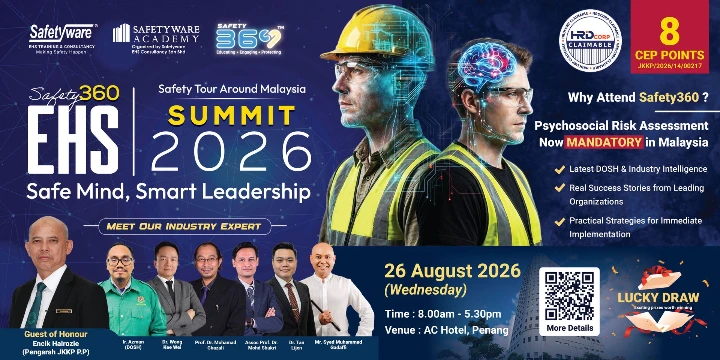
Discover practical strategies to build safer, healthier, and more resilient workplaces at the Safety360 EHS Summit 2026.
Theme: Safe Mind, Smart Leadership
Connect with HR professionals, EHS practitioners, business leaders, and industry experts as they explore the future of workplace safety, psychosocial risk management, ESG, and leadership.
Because great organizations don’t just protect safety—they protect people.
If you’d like to register for the Safety360 EHS Summit 2026 or learn more about psychosocial risk management and workplace wellbeing solutions, contact Safetyware EHS Consultancy.