
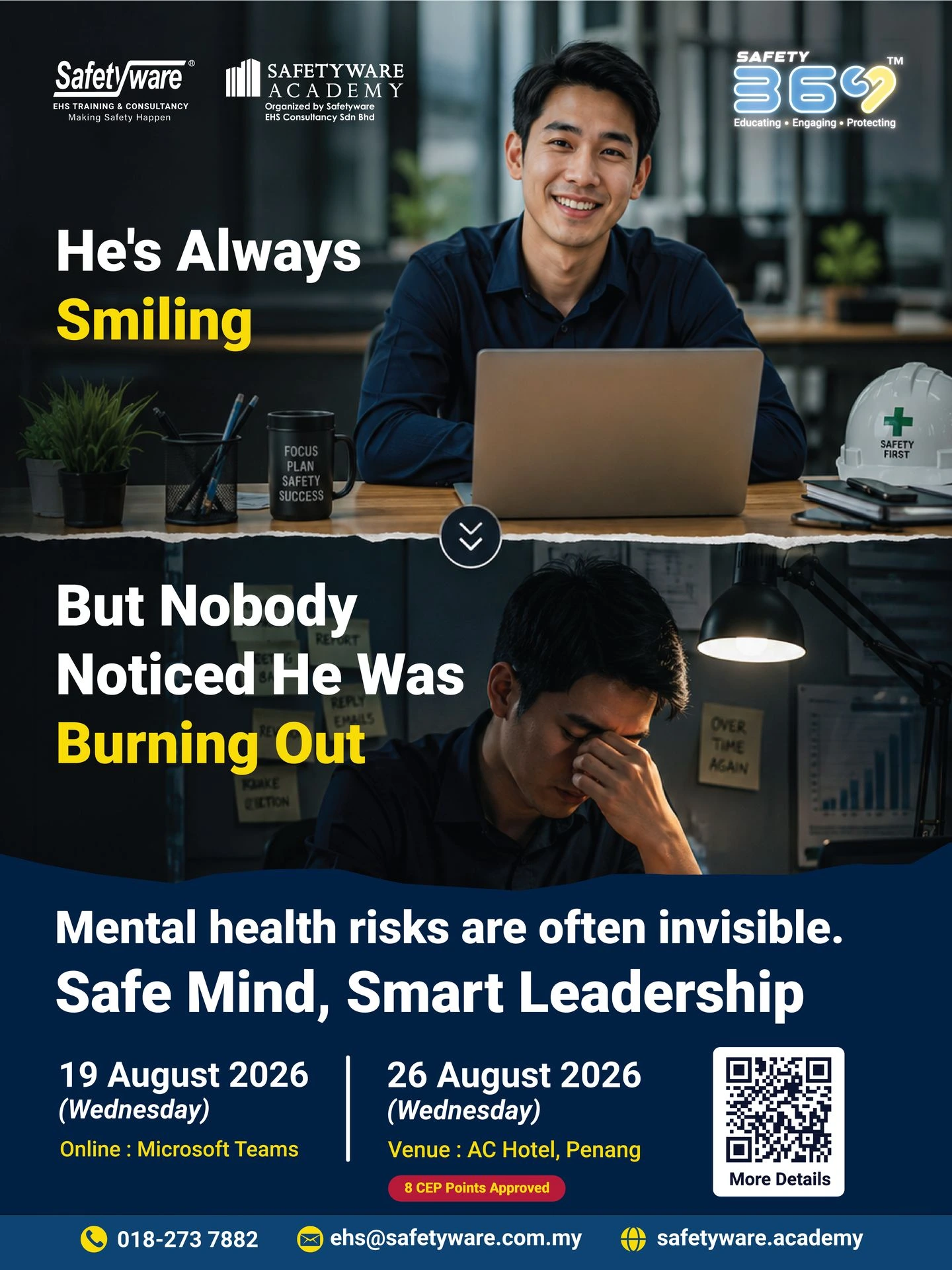
The Hidden Cost of Ignoring Mental Wellbeing at Work
For many organizations, workplace safety is measured by accident rates, compliance records, and audit results. But one of the biggest business risks often goes unnoticed.
📛 It’s not a machine.
📛 It’s not a process.
📛 It’s the mental wellbeing of your people.
Every day, employees face increasing pressures—from heavy workloads and unrealistic deadlines to workplace conflict, role ambiguity, and constant change. When these psychosocial risks are left unmanaged, the consequences extend far beyond the individual. They affect productivity, engagement, retention, and ultimately, business performance.
The question is no longer “Should we care about workplace mental health?”
The question is “Can businesses afford not to?”
The Business Impact of Poor Workplace Mental Health
Mental wellbeing is often viewed as an HR issue, but its effects are felt across every department.
Organizations that neglect psychosocial wellbeing may experience:
👉 Increased employee turnover
👉 Higher absenteeism and presenteeism
👉 Reduced productivity
👉 More workplace incidents and errors
👉 Lower employee engagement
👉 Poor teamwork and communication
👉 Difficulty attracting and retaining talent
👉 Increased healthcare and recruitment costs
These hidden costs accumulate over time, quietly reducing organizational performance.
Burnout Is More Than Just Feeling Tired
Burnout doesn’t happen overnight.
It develops when employees are exposed to prolonged stress without adequate support.
Common workplace contributors include:
📛 Excessive workload
📛 Lack of role clarity
📛 Poor leadership communication
📛 Limited employee recognition
📛 Workplace bullying or harassment
📛 Insufficient work-life balance
📛 Constant organizational change
When employees become emotionally exhausted, motivation declines, creativity suffers, and decision-making deteriorates.
The result?
A workforce that is physically present—but mentally disengaged.
Employee Turnover Is Often a Leadership Signal
Many organizations assume employees leave for higher salaries.
While compensation matters, research consistently shows that people are more likely to leave because of:
❌ Poor management
❌ Toxic workplace culture
❌ Chronic stress
❌ Lack of psychological safety
❌ Limited career development
❌ Feeling undervalued
Replacing an experienced employee can cost significantly more than retaining one through a healthier work environment.
Investing in wellbeing is often more cost-effective than constant recruitment.
Engagement Starts with Psychological Safety
Employees perform at their best when they feel safe to:
✅ Speak up without fear
✅ Ask questions
✅ Share ideas
✅ Report concerns
✅ Learn from mistakes
✅ Support one another
This is known as Psychological Safety .
Organizations with strong psychological safety often experience:
✅ Better collaboration
✅ Faster innovation
✅ Higher trust
✅ Improved problem-solving
✅ Stronger leadership effectiveness
Creating psychological safety is not about lowering standards—it is about enabling people to perform with confidence.
Compliance Is Evolving
Across Malaysia, employers are placing greater emphasis on managing psychosocial risks as part of a comprehensive workplace health and safety strategy.
Forward-looking organizations are moving beyond traditional compliance by proactively identifying workplace stressors, assessing psychosocial hazards, and implementing preventive measures before problems escalate.
This shift reflects a broader understanding that employee wellbeing and organizational performance are closely connected.
What Can Employers Do?
Creating a mentally healthy workplace doesn’t require complicated initiatives. It starts with intentional leadership.
Organizations should consider:
✅ Assessing psychosocial risks systematically
✅ Training leaders to recognize early warning signs
✅ Encouraging open communication
✅ Strengthening employee support systems
✅ Promoting healthy workloads and work-life balance
✅ Measuring employee wellbeing regularly
✅ Embedding psychological safety into workplace culture
Small improvements made consistently can have a lasting impact on employee engagement and business performance.
The Future of Leadership
The strongest organizations of tomorrow will not simply be those with the best technology or the largest workforce.
They will be the ones that build resilient cultures where people feel valued, supported, and empowered to do their best work.
Great leaders understand that business success begins with healthy people.
Because when people thrive, businesses grow.
Join the Conversation at Safety360 EHS Summit 2026
If you’re a CEO, HR professional, EHS practitioner, manager, or business leader, this is your opportunity to learn practical strategies from industry experts on creating mentally healthier, safer, and more resilient workplaces.
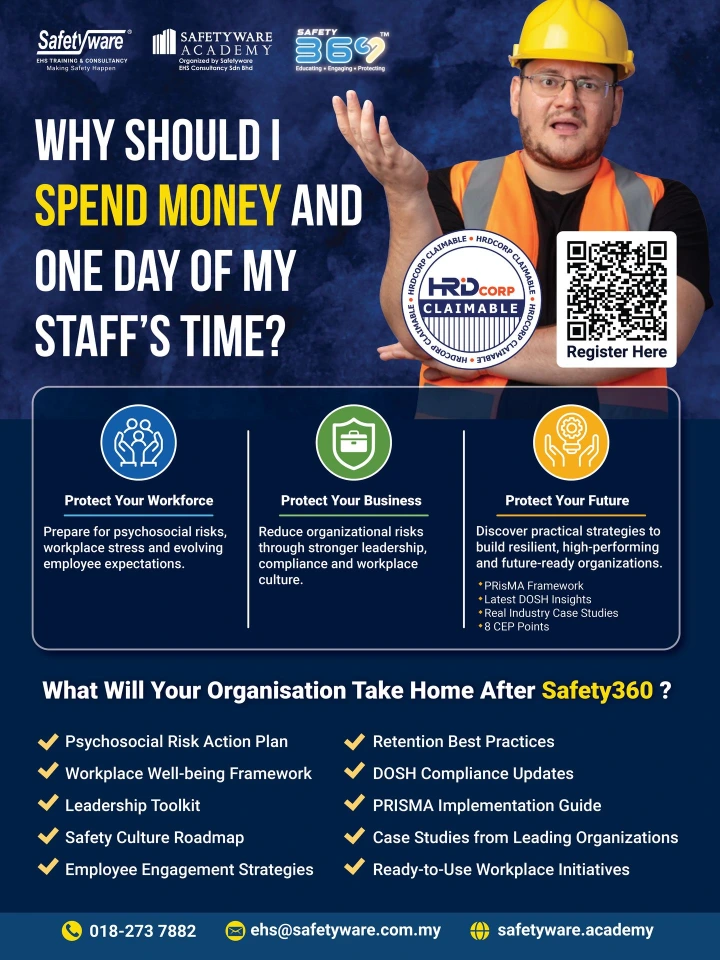
Safety360 EHS Summit 2026
Theme: Safe Mind, Smart Leadership
You’ll discover:
✅ Practical approaches to psychosocial risk management
✅ Leadership strategies for building resilient teams
✅ Real-world case studies from industry experts
✅ The latest workplace wellbeing and EHS trends
✅ Actionable ideas you can implement immediately
Because protecting your people is one of the smartest investments your business can make.